Visa Launches AI Agent Stablecoin Payments — What Every Merchant Needs to Do Now
Visa announced AI agent stablecoin payment tools on June 10. Wirex joined its Agentic Ready programme a day earlier. For merchants, agentic commerce is no longer theoretical — it is infrastructure being built now.
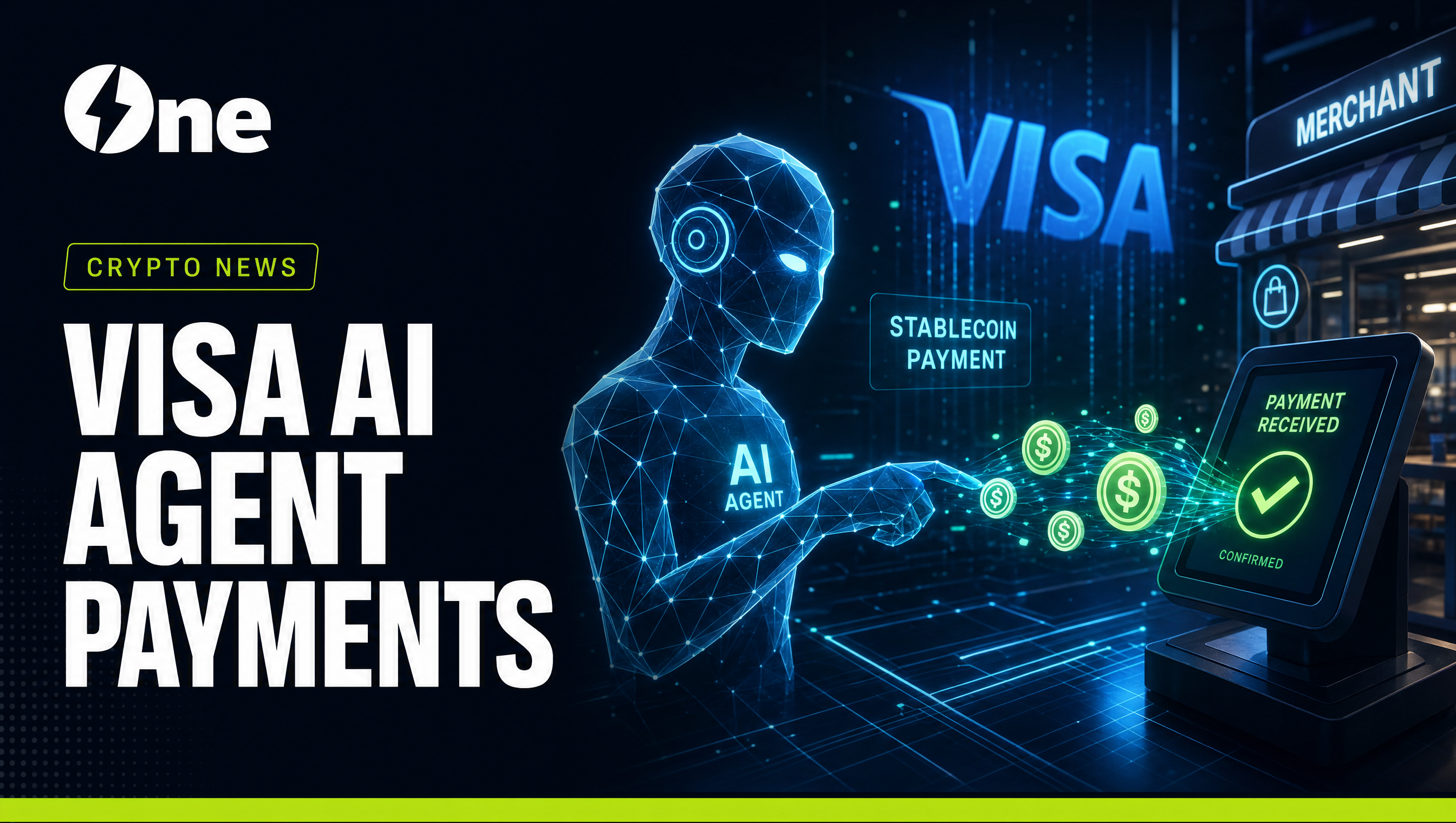
On June 10, 2026, Visa announced new AI agent and stablecoin tools designed to power what it calls "agentic commerce", a model where AI software acts autonomously on behalf of consumers, making purchases, managing subscriptions, and completing transactions without human intervention at each step. A day earlier, Wirex became the first crypto-native issuer to join Visa's Agentic Ready programme, validating stablecoin rails as the settlement layer of choice for agent-initiated payments.
For merchants still processing 100% of revenue through card checkout flows, this week's announcements are a structural warning. The next generation of high-value buyers may not click anything. They will send API calls.
What to Know
- Visa announced AI agent + stablecoin payment tools on June 10, 2026, designed for autonomous, agent-initiated commerce across SaaS, procurement, and marketing spend.
- Wirex joined Visa's Agentic Ready programme on June 9, the first crypto-native issuer in the programme, validating stablecoin settlement as the infrastructure layer for AI payments.
- AI agents pay via APIs, not checkout UIs, traditional card redirect flows, payment forms, and hosted checkout pages are incompatible with autonomous agent transactions.
- Merchants without stablecoin API infrastructure will not be addressable by agentic buyers, the gap between card-only and API-first merchants will widen as agent-driven commerce scales.
- Early deployment targets: SaaS subscriptions, B2B procurement, marketing automation, high-volume categories where AI agents are already embedded in workflows.
What Visa Actually Announced
Visa's June 10 announcement covered three areas: AI agent payment capabilities, expanded stablecoin settlement infrastructure, and tokenisation tools. The AI agent layer is the most significant for merchants. Visa is building a framework that allows AI systems, acting on behalf of corporate buyers, consumers, or automated workflows, to initiate payments with the same security guarantees and fraud controls that apply to human-initiated card transactions.
The settlement layer underneath is stablecoin-native. Visa's existing USDC settlement network, which it has operated since 2021, serves as the foundation. Agent-initiated payments clear in seconds via on-chain settlement, bypassing the T+1 or T+2 delays that affect card-based B2B transactions. For merchants doing any volume of corporate or subscription billing, this has direct cash flow implications.
Wirex's role is as an issuer, the entity that provides the stablecoin-backed payment instruments the agents use. By joining Visa's Agentic Ready programme, Wirex enables AI agents using its infrastructure to initiate Visa-network transactions backed by stablecoin balances. The programme tests how agent-initiated payments behave at scale, where fraud signals come from, and how dispute resolution works without a human in the loop.
Why This Changes the Merchant Calculus
Traditional payment integration assumes a human at the keyboard. The checkout UI exists to guide that human through entering card details, confirming an amount, and hitting submit. The entire stack, hosted payment pages, 3D Secure redirects, browser-based form fields, is built for human interaction.
AI agents do none of that. They construct a payment request programmatically, pass it to a payment API, receive a confirmation or rejection, and continue the workflow. They need a machine-readable endpoint, not a payment form. They need instant webhook confirmation, not a redirect URL. They need deterministic settlement, not a three-day processing window.
Stablecoins satisfy all three requirements. A USDC payment settles on-chain in seconds, produces an immutable transaction record, and delivers a webhook to the merchant's system the moment confirmation occurs. There is no issuing bank to approve the transaction, no card network to route it, and no fraud liability window that could reverse it after fulfilment.
Merchants who have stablecoin payment APIs, with HMAC-signed callbacks, instant confirmation logic, and on-chain transaction records, are compatible with agentic buyers today. Merchants who only offer card checkout are not.
Which Merchant Categories Are Affected First
Visa's announcement specifically names three initial deployment areas.
- SaaS subscriptions, AI agents managing software spend for enterprises will automate subscription renewals, upgrades, and seat additions. Merchants billing B2B SaaS need API-accessible billing endpoints that agents can call without triggering a manual approval flow.
- Marketing spend automation, AI tools managing ad budgets, influencer payments, and content procurement will route spend through programmatic payment APIs. Ad-tech and creator economy platforms are early targets.
- Corporate procurement, AI procurement agents placing recurring orders for supplies, services, or digital goods need merchant APIs that return structured confirmation data the agent can parse and log.
Consumer commerce comes later, as individual AI assistants gain payment authorisation from users. But B2B categories move faster, and the infrastructure requirements are the same.
The Stablecoin Infrastructure Gap
39% of US merchants now accept cryptocurrency at checkout, according to a January 2026 PayPal/NCA study. But accepting crypto at checkout via a payment button is not the same as having a payment API that an AI agent can call programmatically. Most crypto-accepting merchants rely on hosted checkout pages, which agents cannot use, rather than direct API integrations with webhook delivery.
The merchants who are actually infrastructure-ready for agentic commerce are the ones who have integrated a crypto payment gateway at the API layer: generating deposit addresses programmatically, receiving HMAC-signed payment confirmations via webhook, and reconciling on-chain transaction records against internal order IDs. That is a much smaller subset of the 39%.
Walmart and Amazon are reportedly exploring issuing their own stablecoins specifically to capture the cost and speed advantages of on-chain settlement at scale. If that happens, every merchant accepting Walmart Pay or Amazon Pay will, by extension, be accepting stablecoin payments. The infrastructure question will stop being optional.
What Merchants Should Do Before Agentic Commerce Arrives
The window between now and mainstream AI agent payment deployment, likely 12 to 24 months for B2B categories, is the time to build. Three steps matter most.
- Integrate a crypto payment gateway at the API layer, not via a hosted checkout button. The difference is a direct API call versus a redirect. Only the former is compatible with agent-initiated transactions.
- Enable HMAC-signed webhook callbacks. AI agents need authenticated, machine-readable payment confirmations. An unsigned webhook that a human could verify visually is not sufficient for an autonomous system.
- Accept GENIUS-compliant stablecoins, specifically USDC and USAT. These are the stablecoins most likely to underpin Visa's agentic payment network, based on Circle's OCC trust charter and existing Visa USDC settlement infrastructure.
AIO.cash supports all three requirements: a direct payment API, HMAC-signed callbacks with retry pools, full-lifecycle trace IDs for agent-readable transaction records, and multi-chain USDC and USAT support, at 0.3% pay-in and 0% payout fees. Merchants building agentic readiness today can start at AIO.cash.
Visa's announcement this week is not a future forecast. It is infrastructure being built now by the world's largest payment network. The merchants who treat it as a distant concern will spend the next cycle retrofitting rather than growing.
Frequently Asked Questions
What is Visa's Agentic Ready programme?
Visa's Agentic Ready programme is a framework for testing how AI agents — software that acts autonomously on behalf of users — can initiate and complete payments. Visa works with partner issuers like Wirex to validate agent-initiated transactions while maintaining security controls and merchant trust.
How will AI agents pay for things?
AI agents make payments through APIs, not checkout UIs. They send structured payment requests programmatically — most likely via stablecoin rails because stablecoins are programmable, instant, and settle without manual approval windows. Merchants need API-accessible payment endpoints to accept agent-initiated orders.
Do merchants need to change anything to accept AI agent payments?
Yes. Traditional checkout flows — UIs, redirect pages, payment forms — don't work for AI agents. Merchants need payment APIs with HMAC-signed webhooks, instant confirmation, and stablecoin support. Gateways built around card-UI flows will not serve agentic commerce.
Which stablecoins will AI agents use?
Early infrastructure points toward USDC and other GENIUS-compliant stablecoins due to their programmability, regulatory clarity, and availability across major chains. Visa's own stablecoin settlement network uses USDC.
When will AI agent payments become mainstream for merchants?
Visa and Wirex are in active testing as of June 2026. Early commercial deployment in SaaS, procurement, and marketing spend is expected through 2026-2027. Merchants in high-volume B2B, SaaS, and digital goods categories should build readiness now rather than retrofitting later.