AIO.cash Adds Polygon Support — USDT, USDC, and POL Now Live for Merchant Payments
AIO.cash now supports the Polygon network. Merchants can accept USDT, USDC, and POL with sub-cent gas fees, 2-second finality, and the same 0.3% pay-in / 0% payout fee structure.
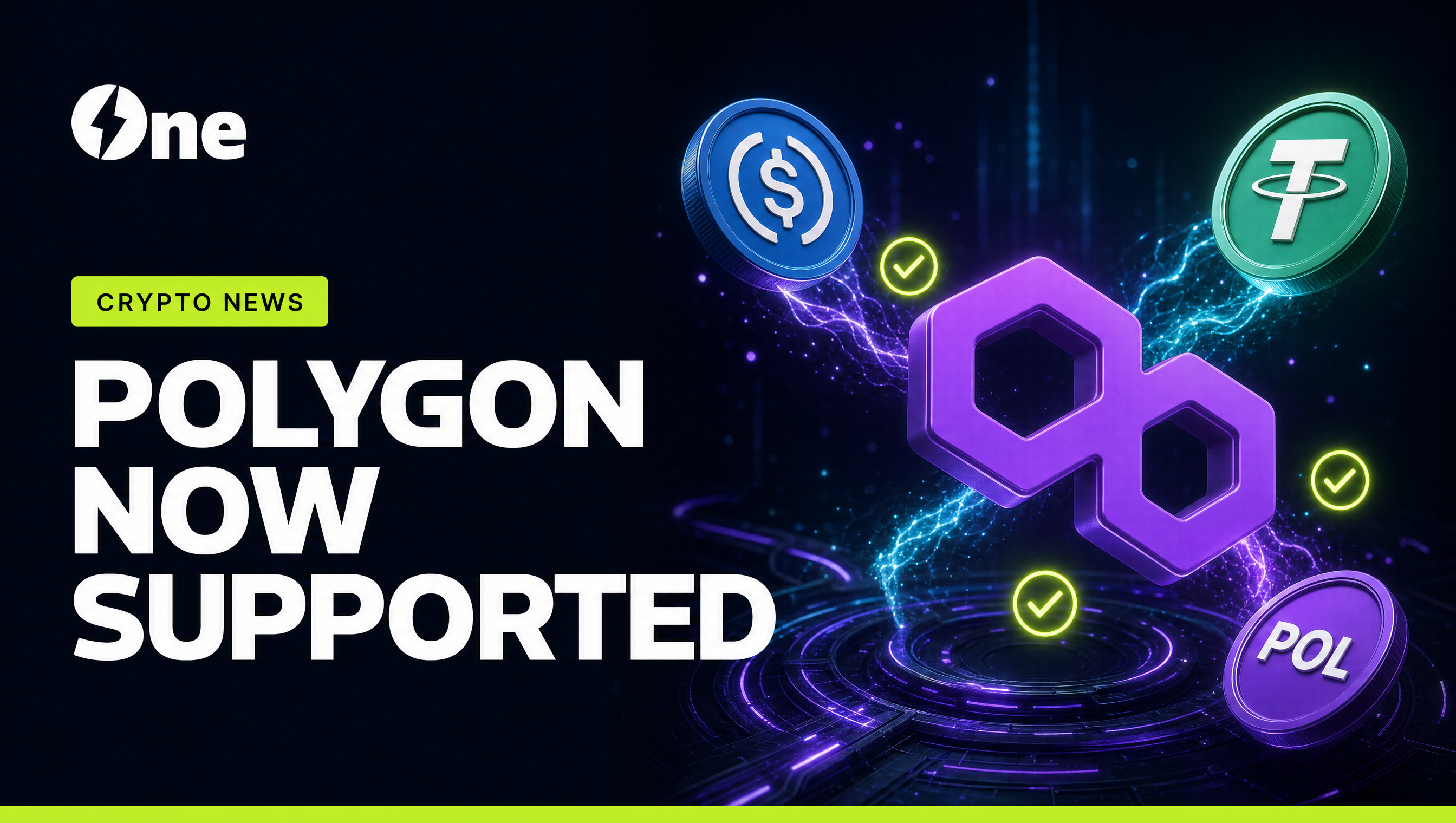
AIO.cash now accepts payments on the Polygon network. Merchants integrating AIO can accept USDT, USDC, and POL, Polygon's native token, with the same 0.3% pay-in fee and zero payout fee that applies across all supported chains. Polygon transactions confirm in approximately 2 seconds at gas costs below $0.01, making it one of the most cost-effective settlement layers available to merchants today.
What to Know
- Three tokens supported on Polygon: USDT (Tether), USDC (Circle), and POL (Polygon's native gas and governance token).
- Polygon processed 204 million transactions in February 2026, an all-time high, with over $3.7 billion in stablecoins currently issued on the network.
- Gas fees run below $0.01 per transaction, making Polygon one of the cheapest EVM-compatible chains for stablecoin settlement.
- Mastercard is expanding onchain card settlement to Polygon in 2026, using regulated stablecoins for intraday settlement, a signal that institutional-grade payment volume is moving to the network.
- Same AIO fee structure applies: 0.3% pay-in, 0% payout, HMAC-signed callbacks, full trace ID across the payment lifecycle.
Why Polygon for Merchant Payments
Polygon PoS is an EVM-compatible sidechain, not a Layer 2 in the strict sense, that runs its own validator set and checkpoints periodically to Ethereum. It processes transactions at a fraction of Ethereum mainnet's cost. (Polygon also offers a true ZK-rollup Layer 2 via Polygon zkEVM, but Polygon PoS is the chain most widely used for merchant payments due to its liquidity depth and ecosystem reach.) The network handled over 100 million transactions per month through early 2026 and has processed $2.5 trillion in cumulative stablecoin volume to date.
For merchants, the economics are straightforward. A USDC payment on Ethereum mainnet incurs gas of $2–$15 depending on network congestion. The same USDC payment on Polygon costs under $0.01. On high-volume merchant operations, thousands of transactions per month, the gas savings alone justify the integration.
Finality on Polygon runs at approximately 2 seconds under normal conditions. Combined with AIO's HMAC-signed webhook delivery, order confirmation reaches your fulfilment system within seconds of the customer completing payment. There is no polling window, no waiting for Ethereum block times, and no manual reconciliation.
What USDT, USDC, and POL Each Bring
| Token | Type | Best for | GENIUS Act Status |
|---|---|---|---|
| USDC | Fiat-backed stablecoin (Circle) | US merchants, regulatory compliance, B2B invoicing | ✅ Compliant |
| USDT | Fiat-backed stablecoin (Tether) | Global merchants, highest liquidity, DeFi-adjacent customers | ⚠️ Global USDT, US enforcement Jan 2027 |
| POL | Network token (Polygon) | Gaming, NFT platforms, Web3-native merchants, Polygon ecosystem apps | N/A (not a payment stablecoin) |
USDC on Polygon is the recommended default for US merchants building stablecoin payment stacks, it is GENIUS Act compliant, issued by Circle (OCC-chartered), and carries the lowest friction for enterprise compliance teams. USDT on Polygon brings access to the largest stablecoin holder base globally and remains widely used in cross-border B2B flows. POL acceptance opens revenue from the gaming, NFT, and Web3-native audience that holds Polygon's network token.
Mastercard's Move to Polygon Is a Market Signal
In June 2026, Mastercard announced it is expanding onchain card settlement to Polygon, enabling intraday and weekend settlement for transactions that traditionally queue until the next banking day. The significance for merchants is not just Mastercard's involvement, it is the confirmation that Polygon's stablecoin infrastructure is now considered institutional-grade by one of the two largest card networks on earth.
When Mastercard routes settlement volume through a public blockchain, that network becomes part of the permanent payments infrastructure. The merchants who have already built on Polygon rails will have a structural head start on the ones who wait for card network mandates.
How to Enable Polygon on AIO
Existing AIO merchants can enable Polygon by selecting USDT, USDC, or POL as accepted tokens in their dashboard and choosing Polygon as the network. The API endpoint, webhook format, and metadata structure are identical to other supported chains, no code changes are required if you are already integrated with AIO at the API layer.
New merchants can start accepting Polygon payments at AIO.cash. The integration takes under an hour for developers with existing webhook infrastructure.
Frequently Asked Questions
Which Polygon tokens does AIO.cash support?
AIO.cash supports USDT, USDC, and POL on the Polygon network. USDC is recommended for US merchants seeking GENIUS Act compliance. USDT provides access to the broadest global holder base. POL opens payment acceptance from the Polygon gaming and Web3 ecosystem.
What are the fees for Polygon payments on AIO.cash?
The same fee structure applies across all AIO-supported chains: 0.3% pay-in fee and 0% payout fee. Gas costs on Polygon run below $0.01 per transaction regardless of transaction size, making it one of the cheapest stablecoin settlement options available.
How fast do Polygon transactions confirm?
Polygon transactions confirm in approximately 2 seconds under normal network conditions. AIO delivers a HMAC-signed webhook to your server within seconds of confirmation, so order fulfilment can begin immediately.
Why is Polygon significant for merchant payments?
Polygon processed 204 million transactions in February 2026 and has $3.7 billion in stablecoins issued on the network. Mastercard is expanding onchain settlement to Polygon in 2026. It is one of the most-used EVM chains for real-world payments globally.
Do I need to change my AIO integration to use Polygon?
Existing AIO merchants can enable Polygon tokens via their dashboard. The API, webhook format, and metadata structure are identical across all supported chains — no code changes are needed if you are already integrated at the API layer.